What Causes Dark Circles Under the Eyes? A Clinical Guide for NYC Clients
A clinical breakdown of the four causes, and why each needs a different treatment
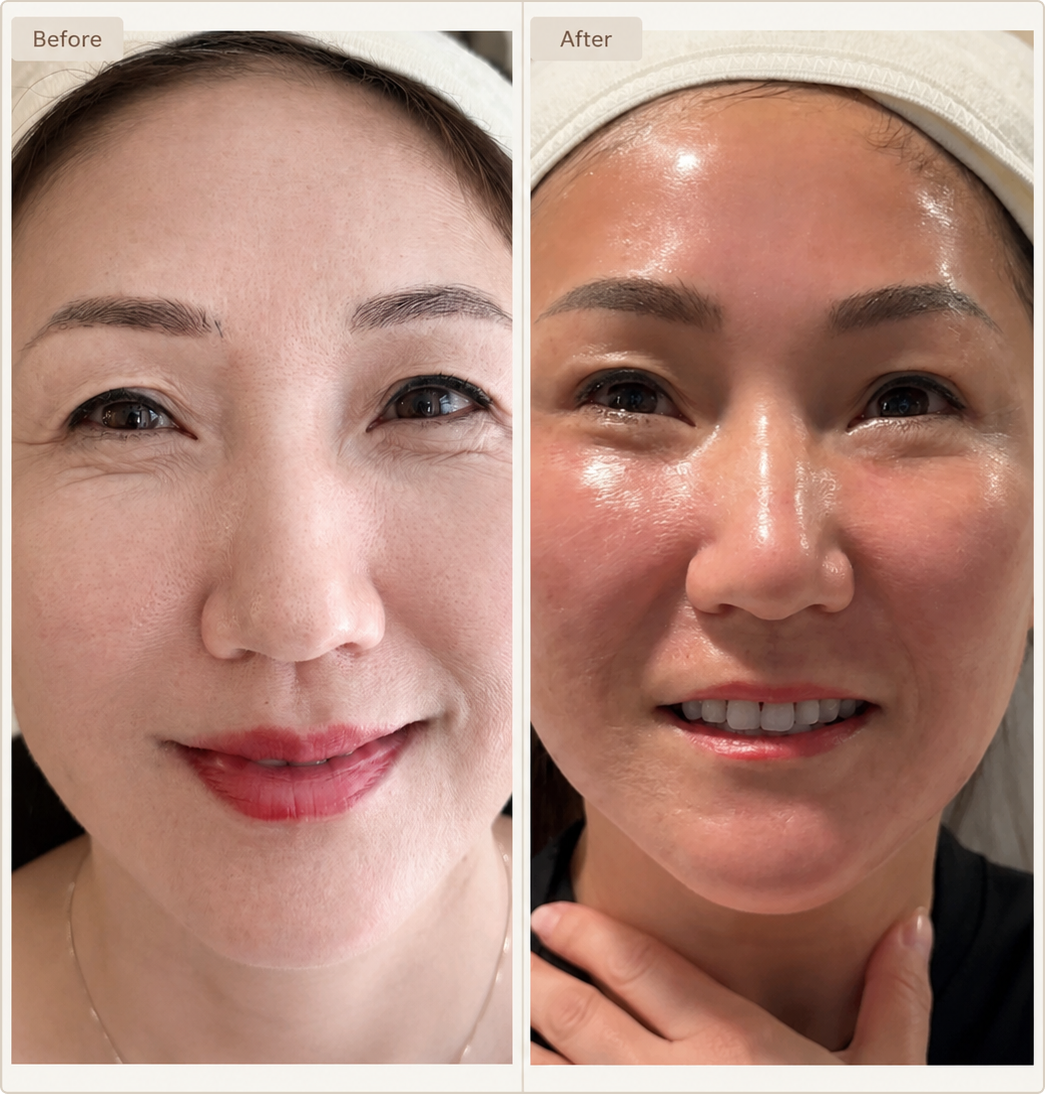
Quick answer: Dark circles under the eyes have four distinct causes: pigmentation in the skin itself, visible blood vessels showing through thin eyelid skin, structural hollowing along the tear trough that casts a shadow, and prominent fat pads that create puffiness with a shadow beneath. Most people have a combination, and each cause responds to a different treatment.
The under-eye area is the thinnest skin on the body, and it sits directly over bone, muscle, vasculature and fat. That means a dark circle is rarely one problem. It is usually two or three overlapping features that read as a single tired-looking shadow in the bathroom mirror. Understanding which of those features you actually have is what determines whether a treatment works.
At JLoo Beauty Experts in Midtown Manhattan, under-eye assessment is a clinical exam, not a guess. Joanne Loo, MS, AGPCNP-BC, our Medical Director and a board-certified nurse practitioner, evaluates skin tone, vascular visibility, volume position and fat pad projection separately before recommending anything. This guide walks through the same framework she uses.
There are four clinical causes, alone or together: periorbital hyperpigmentation, vascular visibility through thin skin, structural hollowing of the tear trough, and prominence of the lower eyelid fat pads. Everything else people blame, from screens to salt to late nights, amplifies one of these four rather than creating a new one.
This matters because the four causes look deceptively similar from arm's length. A brown pigment circle, a blue vascular circle and a grey shadow circle all photograph as darkness under the eye. When you look in a mirror under overhead bathroom lighting, which is the single least flattering light for the periorbital area, all four collapse into the same visual impression. That is the root of most treatment disappointment.
Brown-toned under-eye darkness is usually periorbital hyperpigmentation, which means excess melanin sitting in the skin of the eyelid itself. It is genuinely a skin color change, not a shadow, and it stays the same color when you stretch the skin or change the angle of the light.
Periorbital hyperpigmentation is more common and more pronounced in people with medium to deeper skin tones, because those skin types have more melanocyte activity available to respond to any stimulus. Common triggers include sun exposure (the under-eye area is chronically under-protected), chronic eye rubbing from allergies or contact lens wear, post-inflammatory change after eczema or dermatitis, and simple genetic predisposition.
Pigment responds best to skin-directed treatment, not volume. Consistent daily SPF, topical brightening actives, and resurfacing approaches such as PRF microneedling that improve overall skin quality and tone address the actual problem. Adding volume under a pigment circle does very little, because the darkness is in the skin surface, not beneath it.
Yes, and it is one of the strongest single factors. Both the pigmentation pattern and the underlying bone and soft tissue architecture that create tear trough hollowing run in families, which is why so many people say their dark circles look exactly like a parent's.
Inherited features include baseline skin thickness over the lower lid, the depth of the bony orbital rim, the natural position of the cheek fat pad, and melanin distribution around the eye. If you have had visible under-eye darkness since childhood or adolescence, before any real sleep debt or sun history accumulated, genetics is almost certainly the primary driver.
Morning darkness is almost always fluid. Lying flat for several hours allows lymphatic fluid to pool in the loose tissue around the eye, which temporarily swells the lower lid and deepens the shadow beneath it.
That swelling typically resolves within one to three hours of being upright as lymphatic drainage catches up with gravity. Salt intake the night before, alcohol, allergy season, crying, and sleeping face-down all extend how long the fluid lingers. This is why some mornings look dramatically worse than others despite nothing structural having changed.
Sleep deprivation makes existing dark circles more visible, but it does not create them from nothing. Poor sleep causes vasodilation, meaning the blood vessels under the thin lid skin widen and become more apparent, and it worsens fluid retention. Both amplify what is already there.
This explains a frequent frustration: people correct their sleep for several weeks, see some improvement, and then find the darkness plateaus at a level they still dislike. That remaining darkness is the structural and pigmentary baseline. Sleep was modulating it, not causing it.
A tear trough hollow creates darkness through geometry rather than color. When the transition from lower eyelid to cheek becomes a depression instead of a smooth curve, overhead light cannot reach into it, and the recess reads as a grey or purple shadow.
This hollowing develops from a combination of factors. The midface fat pad descends slightly with age, the orbital rim becomes more defined as bone remodels, and the skin over the depression thins so the bluish tone of underlying vasculature shows through more readily. In some people the hollow is present from their twenties purely from inherited bone structure.
Structural hollowing is the cause most responsive to volume-based treatment. At JLoo we address it with PRF EzGel for the under-eye area, which uses a gel prepared from your own blood rather than a synthetic product. We do not use synthetic under-eye filler at all. The under-eye is an anatomically unforgiving area, and PRF integrates with your tissue and stimulates your own collagen rather than sitting as a separate material. If you want the full comparison, we cover it in detail in PRF EzGel versus filler for the under-eye.
No. True puffiness is forward projection of the lower eyelid fat pads, and it creates darkness indirectly by casting a shadow onto the skin just below the bulge. The skin itself may be perfectly normal in color.
It helps to separate three things that get grouped together. Fluid puffiness fluctuates day to day and resolves with time upright. Fat pad prominence is constant, present in every photo and every lighting condition, and often runs in families. Hollowing is a depression, which is the opposite problem, though a hollow directly beneath a fat pad exaggerates how much that pad appears to protrude.
This distinction has real treatment consequences. Adding volume beneath a genuinely prominent fat pad can make the whole area look heavier rather than smoother. A prominent fat pad that is constant and significant may be better served by a surgical consultation than by any injectable, and we will say so directly rather than treat around it.
You can narrow it down at home with three checks, though a clinical exam confirms it. Use indirect natural daylight in the afternoon, not bathroom overheads in the morning.
If the darkness has a distinctly blue or purple cast and you can see fine vessels under the skin, the driver is vascular visibility through thin skin. That responds to treatments that thicken and strengthen the dermis, such as Rejuran for the under-eye area, rather than to volume or brightening alone.
Most people land on a combination, such as mild pigment from unprotected sun, plus a genetic tear trough hollow, plus fluid variability from allergy season. That needs a sequenced plan, not one product.
Because each cause responds to a different mechanism, and the wrong mechanism applied to the wrong anatomy can exaggerate the original feature. This is the single most common reason people arrive at our Midtown office already frustrated.
Volume placed under pigmented skin does not lighten the pigment, and if the area was not actually hollow it can add fullness where none was wanted. Brightening actives applied to a purely structural shadow produce no visible change, because there is no excess melanin to address. Aggressive resurfacing on skin that is already thin can cause post-inflammatory pigmentation, which adds a new problem on top of the original one.
Every under-eye consultation begins with a structured assessment of all four causes before any treatment is discussed. That exam is performed by Joanne Loo, MS, AGPCNP-BC, our Medical Director and a board-certified nurse practitioner, with MD oversight from Dr. Jade Hon, MD, a board-certified neurologist.
Our position on the under-eye is deliberate. We use PRF exclusively for this area and do not offer synthetic under-eye filler. PRF is prepared from a small draw of your own blood, so there is no foreign material, and it works by stimulating your own collagen and improving tissue quality over a series of sessions. For pigment and skin quality we look to PRF microneedling, and when the broader midface is contributing to the shadow, we assess whether support elsewhere is appropriate as part of our injectable services.
We are located at 505 8th Ave, Suite 23-03, in Midtown Manhattan, convenient to Penn Station and Hudson Yards, and we hold a 4.9 star rating across 159 Google reviews. If you are unsure which of the four causes applies to you, that is exactly what a consultation is for. Book an under-eye consultation with Joanne Loo, MS, AGPCNP-BC and get a clear answer before you spend anything on treatment.
Meaningful improvement is realistic for most people, complete elimination often is not, particularly when bone structure and inherited pigmentation are the primary drivers. A clear assessment tells you at the outset which portion of your darkness is modifiable and which is structural.
Adequate hydration helps with fluid balance and can reduce the morning swelling that deepens shadows. It does not change pigmentation, skin thickness or bone structure, so treat it as supportive rather than corrective.
Concealer is a color correction, so it works reasonably on pigment and poorly on shadows. Applied into a structural hollow it often settles into fine lines and can catch light in a way that emphasizes the depression rather than hiding it.
No. We use PRF only for the under-eye area and do not offer synthetic under-eye filler at all. PRF is derived from your own blood and works by improving your own tissue quality rather than adding a separate material to a delicate region.
Yes, in two ways. Allergic congestion increases vascular pooling around the eye, and chronic rubbing drives post-inflammatory pigmentation. Controlling allergies is often a genuine prerequisite before assessing your true under-eye baseline.
Genetic pigmentation and inherited hollowing can be visible in the teens or twenties. Age-related hollowing typically becomes noticeable from the thirties onward as midface volume shifts and eyelid skin continues to thin.
Often yes, though sequencing usually gives a better result than doing everything at once. Your provider will decide the order based on which cause is contributing most to the appearance you want changed.
The under-eye area retains fluid after treatment, so the first several days are not representative. Follow the timeline your provider gives you at your visit and assess at the scheduled follow-up rather than in the first week.
It is anatomically demanding, with thin skin, important vasculature and very little margin for imprecision. Provider selection matters more here than almost anywhere else on the face.
Medically reviewed by Joanne Loo, MS, AGPCNP-BC, Medical Director. MD oversight: Dr. Jade Hon, MD. This article is for educational purposes and is not a substitute for a personalized clinical assessment.