PRF EzGel vs. Filler for Undereye Hollows:
What NYC Clients Should Know
Quick answer: PRF EzGel and Liquid Gold PRF are natural alternatives to synthetic undereye filler, made entirely from your own blood. Liquid Gold PRF is fluid and best for skin quality, fine lines, and thinning skin. PRF EzGel is thicker and gives more visible support for hollowing. Neither carries the Tyndall (bluish discoloration) risk of HA filler, and most clients need 3 to 4 sessions for full results.
If you’ve searched for ways to soften undereye hollows or dark circles in NYC, you’ve probably come across two very different categories of treatment: synthetic dermal filler and regenerative options like PRF EzGel and Liquid Gold PRF injections. Both can improve the look of hollowing under the eyes, but they work in fundamentally different ways, and for an area as thin skinned and visible as the undereye, that difference matters.

The skin under your eyes is some of the thinnest on your face, with minimal fat padding and a dense network of blood vessels close to the surface. That’s exactly why undereye treatments carry a higher bar for precision than almost anywhere else on the face.
It’s also why “undereye bags” isn’t really one problem. Clients describe the same frustration, looking tired, dark, hollow, or puffy, but the underlying cause varies widely: hollowing and lost structural support, thin or crepey skin, fine lines from repetitive muscle movement, pigmentation and shadowing, or true puffiness from fat pad prominence. The right treatment starts with figuring out which of these is actually driving what you’re seeing in the mirror, which is why every undereye plan at JLoo Beauty Experts begins with a clinical assessment rather than a default recommendation.
Hyaluronic acid (HA) filler is injected to physically add volume beneath the eyes, smoothing the transition between the lower eyelid and cheek. It can deliver visible results immediately. It’s also a synthetic material, which means it carries risks specific to this area: the potential for a bluish discoloration under thin skin (the Tyndall effect), lumping or migration if overfilled, and a look that some clients describe as “puffy” rather than “rested” when too much is used. Results typically last 9 to 18 months, after which the treatment needs to be repeated.
At JLoo Beauty Experts, we don’t use synthetic undereye filler. Instead, we offer two ways to use your own Platelet-Rich Fibrin (PRF), the next generation upgrade to PRP, to address undereye hollowing and dark circles from within your own biology.
Liquid Gold PRF uses your PRF in its natural, fluid state, injected beneath the thin under-eye skin. Its fluid consistency allows the clinical team to support areas where the primary concern is tissue quality, thinning, or more diffuse under-eye rejuvenation: fine lines, dryness, crepey texture, and early hollowing. Improvement is gradual. Most clients notice changes in skin quality, fine lines, and texture as their body’s regenerative response develops over the following weeks.
PRF EzGel processes your PRF into a thicker, structured consistency for clients who want more visible support in hollow or sunken areas. Its thicker consistency can provide more visible support where loss of structure or tear trough hollowing is present, and early tissue thinning may respond faster to EzGel when the client wants earlier visible improvement. One important caveat: temporary swelling right after treatment isn’t the final result. Collagen and tissue remodeling continue for months afterward.
Because both are made from your own blood, there’s no foreign material and no Tyndall risk. The trade-off with either option is the same: results build gradually over weeks as your body’s own collagen responds, rather than delivering instant, filler-like volume on the spot.
This is one of the most common questions we hear, and the honest answer is that neither is universally “better.” They share the same regenerative PRF foundation: your own platelets, growth factors, and fibrin matrix. The real difference is consistency, placement, and how much support the area needs.
In short, PRF EzGel tends to be selected for more noticeable hollowing that calls for earlier visible support, while Liquid Gold PRF tends to be selected when the priority is tissue quality and a more gradual result.
Because “tired looking eyes” can come from several different underlying causes, we’ve found it’s most useful to think in terms of concern, not treatment name. Here’s how the most common concerns typically map to a starting approach. Your actual plan is always set at a consultation, not from a list like this one.

Many clients have more than one concern at once, which is why combination plans are common. For example, PRF EzGel for structural support paired with PRF Microneedling for texture, or Liquid Gold PRF paired with Botox when both tissue quality and dynamic lines are contributing to the tired look.
Read more about our full regenerative and collagen-stimulating menu, including PRF Microneedling, on our Regenerative & Collagen Treatments page.
Because every plan is built around individual anatomy, here are two illustrative examples of how a plan might come together. These are general scenarios based on common presentations we see, not specific client case histories.
A client noticing a visible hollow along the orbital rim, along with thinning under-eye skin, might be started on a series of 3 PRF EzGel sessions for faster improvement to the hollowing, 3 sessions of Liquid Gold PRF to support skin quality, or a blended plan of 2 Liquid Gold PRF sessions plus 2 EzGel sessions, spaced 4 to 6 weeks apart, with the exact mix set at consultation.
When hollowing isn’t the primary concern, a plan built around PRF Microneedling for fine lines and texture, paired with subdermal Liquid Gold PRF for deeper tissue quality, is a common starting point, typically 3 sessions of each, working together rather than as separate treatments.
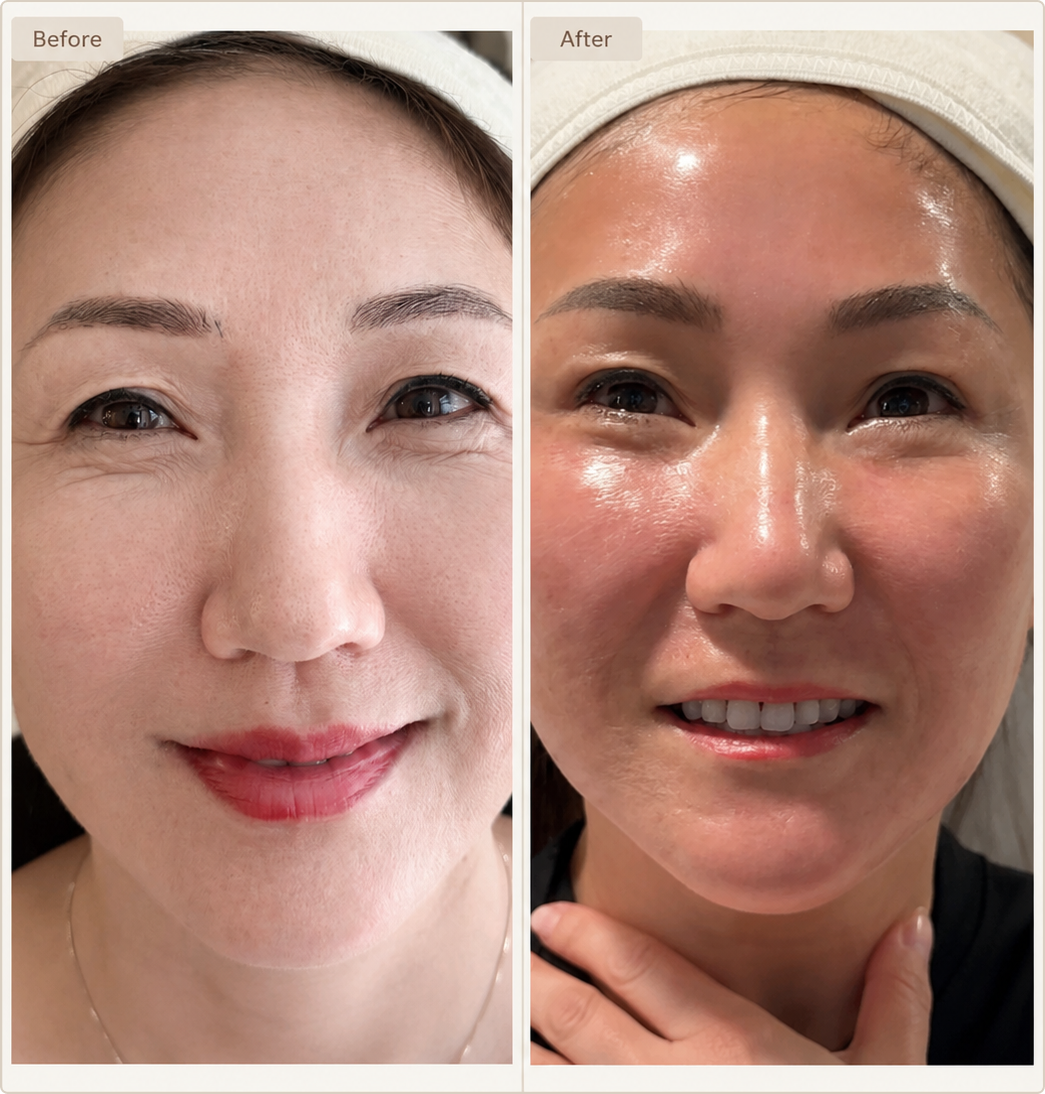
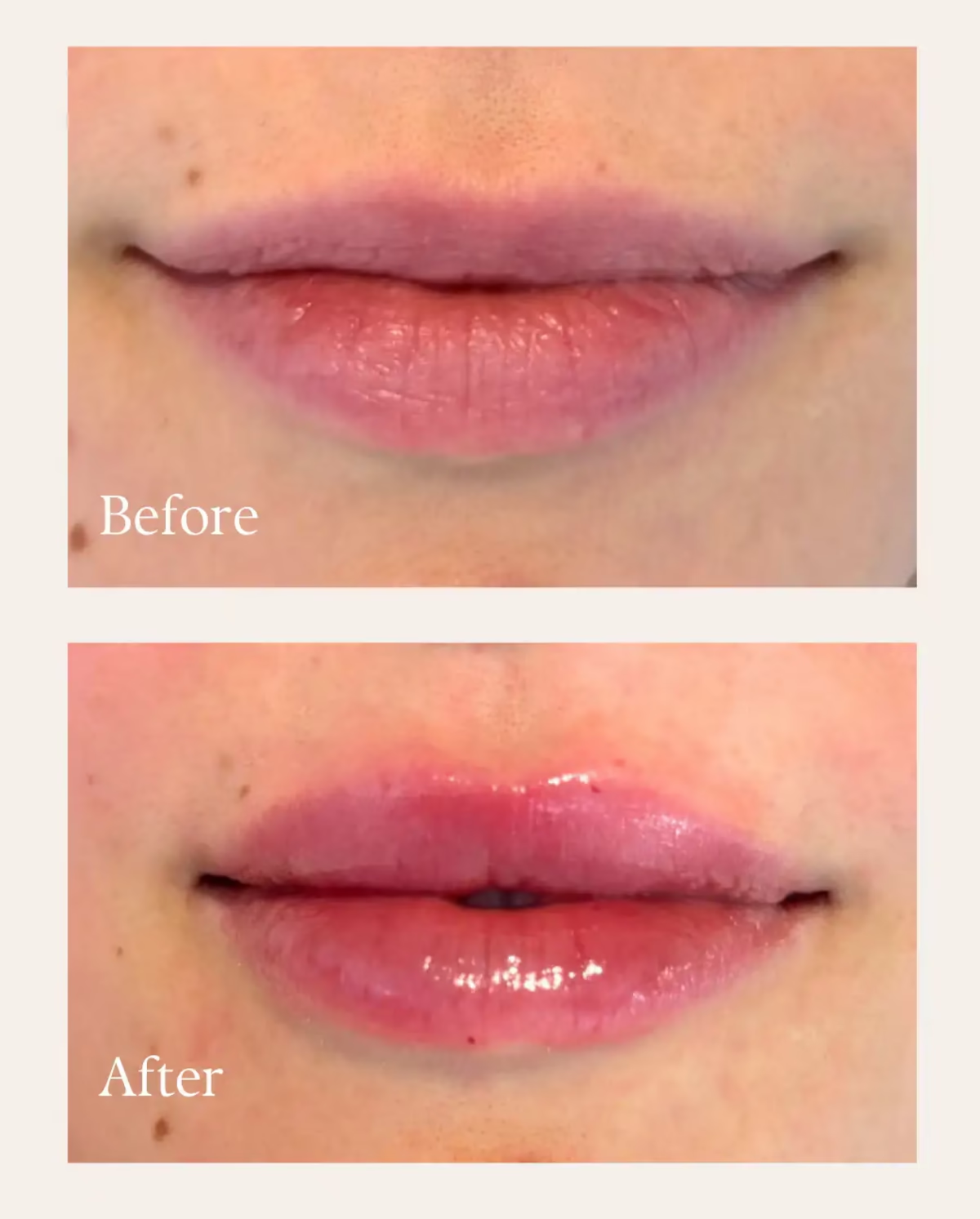
Your provider will walk you through what’s realistic for your anatomy and timeline at your consultation. We don’t ask you to guess which combination applies to you. You can also browse real results on our Before & After page.
If you’ve read our guide to Rejuran for under eyes, you already know we offer more than one regenerative approach to this area. Rejuran (PDRN) works through polynucleotides derived from salmon DNA to repair and hydrate the skin barrier, while PRF EzGel and Liquid Gold PRF injections use your own platelet-rich fibrin to rebuild volume and texture. They’re not competing options. Some clients combine both as part of a broader undereye plan. We’ll help you sort out which combination makes sense for your skin during your consultation.
Every undereye treatment at JLoo Beauty Experts starts with a consultation and assessment by Joanne Loo, a board-certified Nurse Practitioner and Medical Director, with MD oversight from Dr. Jade Hon. Different under-eye concerns can look similar, so the right treatment begins with a clinical assessment, not a default recommendation before we understand what’s actually happening in the area you’re concerned about.
A typical consultation walks through five steps: understanding your main concern, clarifying whether it involves hollowing, texture, thinning, darkness, movement, or puffiness, educating you on which approach fits that concern, setting honest expectations about a natural-looking, gradual result, and, only once all of that is clear, recommending a personalized treatment plan.
We do not sell one treatment for every under-eye concern. We guide each client toward a personalized clinical assessment and a thoughtfully selected treatment plan.
JLoo Beauty Experts is located at 505 8th Ave, Suite 23-03, steps from Penn Station, Hudson Yards, and Herald Square. Learn more about our regenerative and collagen treatments, or book a personalized under-eye consultation online today so our clinical team can assess your anatomy, tissue quality, and treatment goals.
No. PRF EzGel is made entirely from your own blood, with no hyaluronic acid or synthetic material. It provides structural support through your own concentrated platelets and growth factors rather than an injected synthetic gel.
They share the same regenerative PRF foundation. Liquid Gold PRF is more fluid and supports diffuse tissue quality, fine lines, and thinning skin. PRF EzGel is thicker and more structured, and is often selected when hollowing or volume loss is more noticeable.
“Eye bags” can mean hollowing, thinning, texture, pigmentation, or puffiness. Our clinical team assesses which of these is creating your specific appearance before recommending a treatment. True puffiness from fat pad prominence, in particular, requires careful evaluation and may not be resolved with PRF-based treatment alone.
The goal of regenerative treatment is natural-looking support and gradual improvement, not changing your facial features. Because Liquid Gold PRF and PRF EzGel use your own biology rather than synthetic filler, results tend to build subtly over time instead of arriving all at once.
Because PRF EzGel contains no synthetic material, it doesn’t carry the Tyndall effect (bluish discoloration) risk associated with HA filler in this area. As with any injection, mild swelling or bruising is possible for 24 to 72 hours.
Yes. Combination plans are common, since most clients have more than one undereye concern. Your provider will recommend a combination based on your consultation.
Some clients notice subtle changes within the first few weeks, while collagen and tissue quality continue improving over the following months. PRF EzGel’s thicker consistency tends to show earlier visible support; Liquid Gold PRF builds more gradually. The exact timeline depends on the treatment, your anatomy, the concern being addressed, and the number of sessions.
Most clients see optimal results with a series of 3 to 4 sessions spaced 4 to 6 weeks apart, followed by maintenance once or twice a year. Your provider will confirm an exact number at your consultation based on your goals.
Medically reviewed by Joanne Loo, MS, AGPCNP-BC, Medical Director. MD oversight: Dr. Jade Hon, MD. This article is for educational purposes and is not a substitute for a personalized clinical assessment.