
If you have been researching regenerative skin treatments in Manhattan, you have almost certainly encountered both PRF and PRP. These abbreviations appear on medspa websites, social media posts, and in conversations with providers, often used interchangeably by people who do not fully understand the distinction.
They are not the same treatment.
PRF is a significant clinical advancement over PRP. The difference matters for your results, your experience, and the sustainability of your outcomes.
This guide explains exactly what PRP is, what PRF is, why PRF is the superior choice for most aesthetic applications, and how JLoo Beauty Experts uses PRF Microneedling and PRF EzGel to help clients in Midtown Manhattan achieve real, lasting skin transformation.
Aesthetic medicine has shifted meaningfully over the past decade. For a long time, the dominant approaches were additive, adding volume through fillers, or subtractive, removing or repositioning tissue surgically. Both remain clinically valuable and have their place.
But a third approach has grown rapidly: regenerative medicine. Regenerative aesthetics works with the body's own biology rather than introducing external substances or removing tissue. The goal is to activate, stimulate, and support the skin's innate capacity to repair, rebuild, and renew itself.
PRP was the first widely adopted regenerative treatment in aesthetic medicine. It has been used across orthopedics, sports medicine, hair restoration, and aesthetics for over two decades. PRF is the next generation, developed specifically to address PRP's limitations and deliver more sustained, more biologically potent results.
At JLoo Beauty Experts, our regenerative philosophy drives everything we do. We believe the most powerful aesthetic results come from working with your body's own systems, not around them.
PRP stands for Platelet-Rich Plasma.
To understand PRP, start with whole blood. Blood has four main components: red blood cells, white blood cells, platelets, and plasma, the liquid carrier that holds everything together.
Platelets are small, specialized cells whose primary function is wound healing. When tissue is damaged, platelets rush to the site and release proteins called growth factors, signaling molecules that instruct surrounding cells to activate, repair, and regenerate.
PRP is created by drawing a small amount of the patient's blood, placing it in a centrifuge, and spinning it at a speed calibrated to separate the components by density. The centrifuge layers the blood: red blood cells settle to the bottom, a thin layer called the buffy coat containing white blood cells and platelets forms in the middle, and clear plasma floats to the top.
The plasma layer, now concentrated with platelets relative to whole blood, is extracted. This is PRP. When applied to or injected into the skin, the concentrated platelets release their growth factors and signal local cells to initiate repair and collagen production.
PRP has a proven track record in aesthetic medicine. Hundreds of peer-reviewed studies document its effectiveness for skin rejuvenation, hair loss treatment, and wound healing. It works. For many years, it was the best regenerative option available. But it has limitations, and PRF was developed specifically to address them.

PRF stands for Platelet-Rich Fibrin.
It is the next generation of PRP, developed initially in dental and oral surgery before migrating into aesthetic medicine in the early 2000s. Today, PRF is considered the more advanced and clinically superior regenerative option for most aesthetic applications.
The key difference between PRF and PRP lies in what is NOT added during the collection process.
PRP collection tubes contain an anticoagulant, typically sodium citrate or EDTA. These agents prevent the blood from clotting during centrifugation, keeping the plasma in a liquid state. This makes PRP easy to inject but comes at a cost.
PRF collection tubes contain no anticoagulant. Without the clotting inhibitor, the blood is free to begin its natural clotting cascade during the centrifugation process. Platelets activate. Fibrin, the structural protein that forms the mesh of a natural blood clot, begins assembling into a three-dimensional scaffold.
The result is the fibrin matrix: the defining characteristic of PRF and the reason it outperforms PRP.
In PRP, growth factors are released immediately upon application or injection, all at once, in a single burst. The biological signal is intense but brief.
In PRF, growth factors are embedded within the fibrin scaffold and released slowly and continuously over seven to 14 days. This sustained release profile far more closely mirrors the body's natural healing process, and it is why PRF produces more lasting collagen stimulation than PRP.
Think of the difference this way. PRP delivers a single, intense signal. PRF delivers a sustained conversation with your tissue, one that continues for nearly two weeks and consistently drives collagen production throughout that entire window.
Understanding why PRF outperforms PRP requires a closer look at the specific growth factors involved and what each one does in the skin.
PRF retains higher concentrations of all of these growth factors than PRP. The reason: the anticoagulant used in PRP processing affects platelet activation and the completeness of growth factor release. Removing that anticoagulant, as PRF does, produces a more biologically complete and potent product.
Beyond concentration, the fibrin scaffold acts as a reservoir. Growth factors are embedded within its three-dimensional structure and released as the scaffold gradually degrades over one to two weeks. This sustained release is far more effective at triggering lasting collagen production than the immediate burst that PRP delivers.
PRF Microneedling, sometimes called the JLoo Glass Skin Facial, combines two independently powerful collagen-stimulating modalities into a single treatment that delivers more than either can achieve alone.
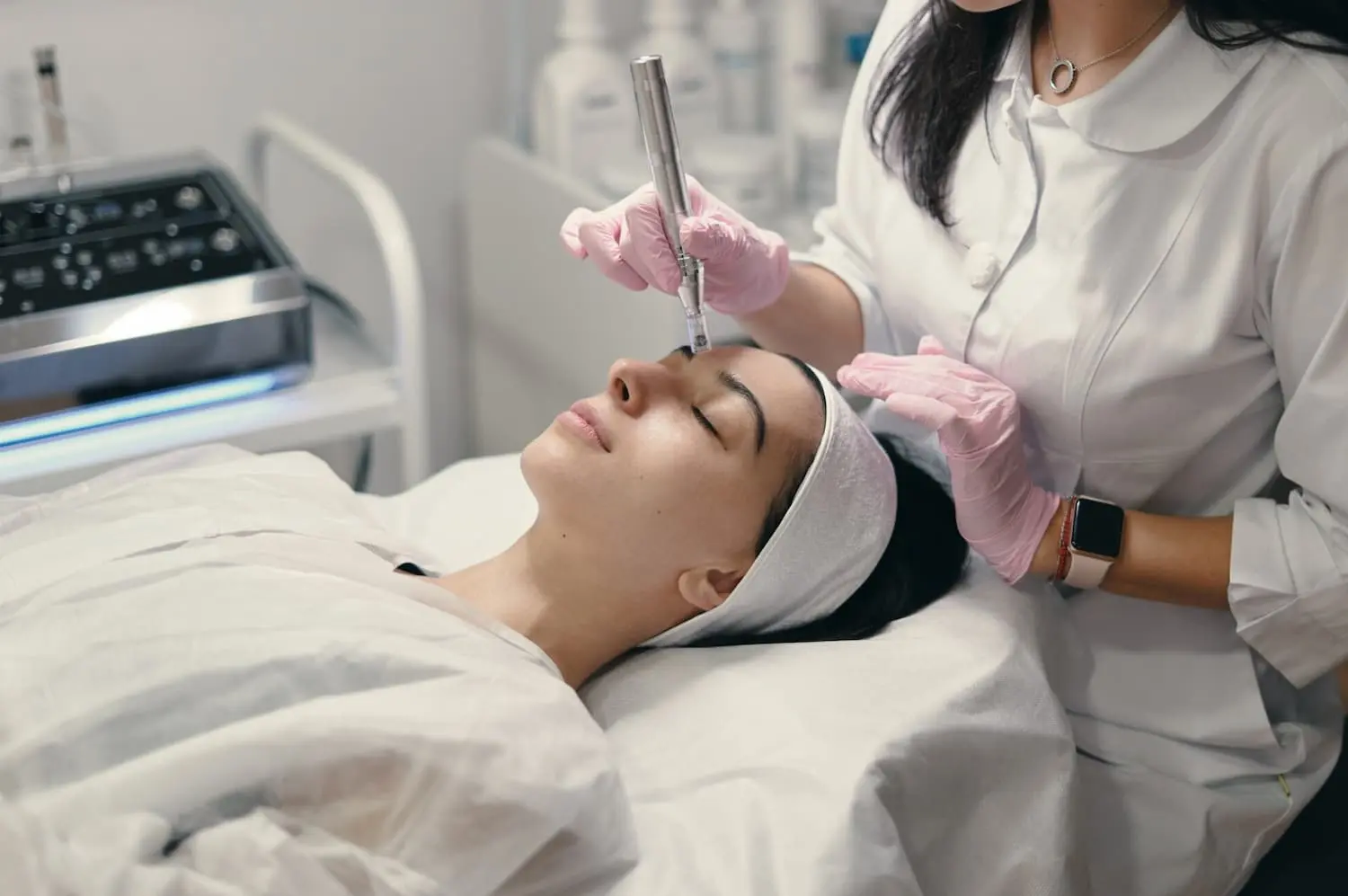
Microneedling uses a device with fine, precisely calibrated needles to create thousands of controlled micro-channels in the skin's surface. This triggers the body's wound healing response and initiates collagen remodeling in the dermis. But equally important: the micro-channels created allow topical substances to penetrate dramatically deeper than they can through intact, unbroken skin.
Immediately following microneedling, the freshly processed PRF is applied to the treated skin. The micro-channels created by the needles carry the PRF deep into the dermis, far beyond where any topical product could normally reach without this mechanical assist.
The growth factors begin their work. Fibroblasts are stimulated to produce new collagen. VEGF drives angiogenesis and improved circulation. EGF promotes epidermal renewal. The fibrin scaffold ensures this process continues for the following week to two weeks, not just in the hours immediately following application.
The combination creates a result neither treatment achieves independently. Microneedling activates the skin's repair response and creates the delivery channels. PRF amplifies and sustains that response with a concentrated, precisely timed dose of autologous growth factors delivered directly into the tissue where collagen production happens.
Clinical results from PRF Microneedling include:
PRF EzGel takes PRF one step further, and in doing so, creates one of the most innovative treatments available in regenerative aesthetics today.
The process begins with PRF. Once the PRF is prepared through centrifugation, it is placed in a warm water bath at approximately 75 degrees Celsius. At this temperature, albumin, a protein naturally present in the plasma, denatures and coagulates. Combined with the fibrin scaffold structure of the PRF, this produces a thick, gel-like substance with a consistency that resembles a soft dermal filler.
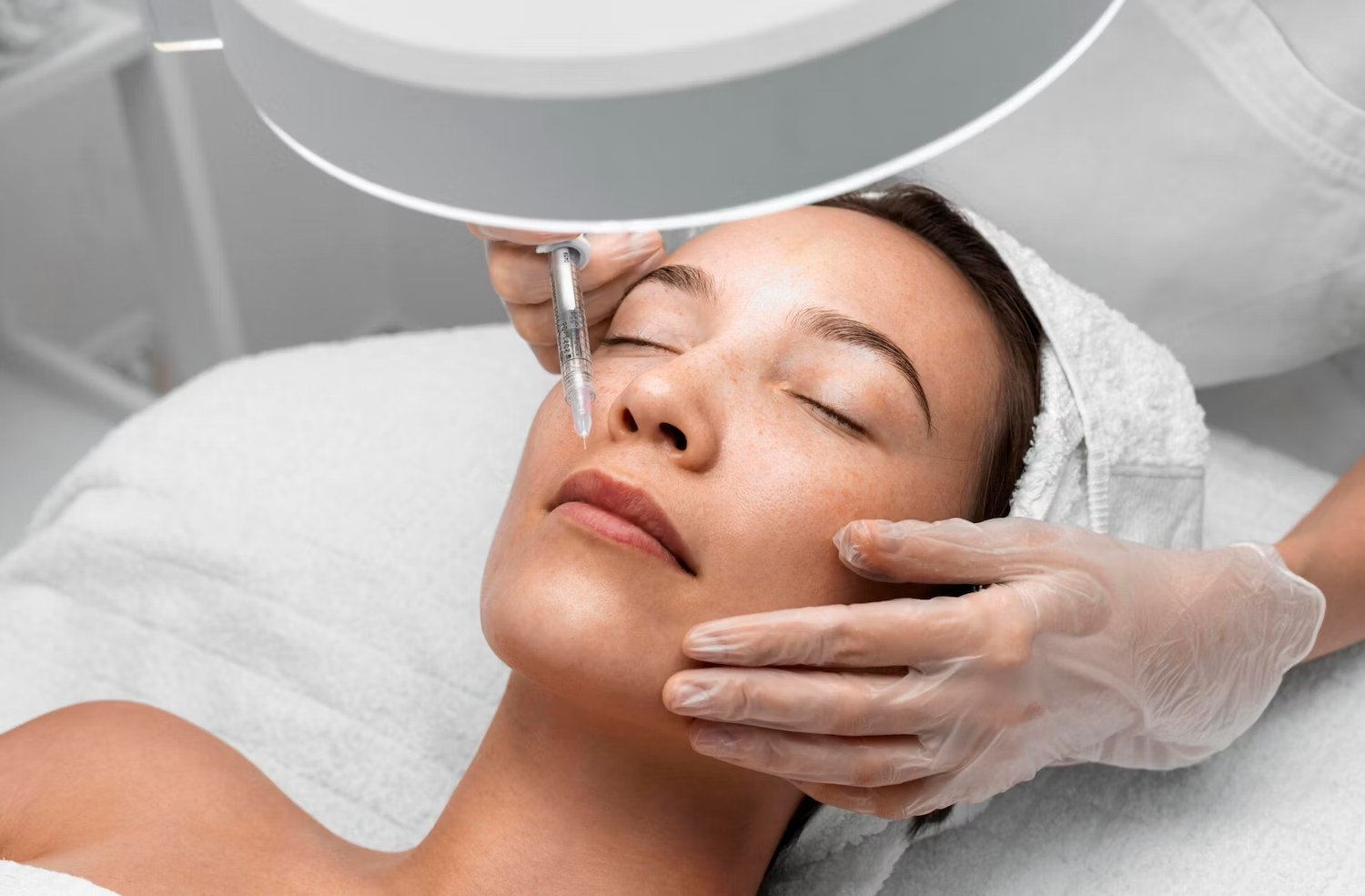
This EzGel is then drawn into syringes and injected into areas of volume loss: the tear troughs, nasolabial folds, lips, temples, cheeks, or any area where volume has diminished.
EzGel accomplishes something that no synthetic filler can: it simultaneously provides immediate volumization AND triggers long-term collagen production at the injection site.
The gel itself provides immediate volume, you see a result right away. And because the gel is PRF, it continues releasing growth factors into the surrounding tissue for the following one to two weeks, stimulating genuine collagen production where the injection was placed.
Two things happening at once:
Unlike synthetic fillers, hyaluronic acid, calcium hydroxylapatite, or poly-L-lactic acid, EzGel is entirely derived from your own biology. There is no foreign substance. No risk of filler migration. No risk of allergic reaction. No synthetic molecule.
This is a question we field often, and the honest answer is that they are different tools for different goals and different clients.
We offer both approaches at JLoo. We recommend based on your specific goals, your degree of volume loss, your aesthetic preferences, and your timeline.
The versatility of PRF Microneedling is one of its most valuable characteristics. A single treatment addresses multiple skin concerns simultaneously. Here is how it works for specific issues.
PRF Microneedling is one of the most effective non-laser approaches to acne scarring currently available. The mechanical remodeling from the microneedles, combined with the sustained growth factor activity from the PRF, produces significant improvement in depressed scars, textural irregularities, and dark marks left by previous breakouts. Multiple sessions produce progressive improvement.
The collagen stimulation produced by PRF Microneedling improves the density and structural quality of the skin matrix, plumping fine lines from within through genuine tissue building rather than temporary filling.
Pore size is influenced by skin elasticity and the collagen structure surrounding the pore opening. Improved collagen density from PRF Microneedling reduces the appearance of enlarged pores over a course of treatments.
The angiogenic effects of PRF through VEGF activity improve circulation and nutrient delivery to the skin. Clients consistently report a brighter, more radiant complexion following a course of PRF Microneedling, the "glass skin" effect that has become one of the most requested results in aesthetic medicine.
For mild to moderate skin laxity, PRF Microneedling provides meaningful improvement in firmness and skin elasticity. For deeper structural laxity, we often recommend combining PRF Microneedling with Ultherapy PRIME for a comprehensive approach.
Unlike some laser treatments, PRF Microneedling is appropriate for all skin tones and types. It does not involve light or heat at the surface level, which eliminates the risk of post-inflammatory hyperpigmentation that some laser treatments carry for darker skin tones. This is an important advantage for our diverse Midtown Manhattan client base.
PRF Microneedling and PRF EzGel are appropriate for a wide range of clients, including many who might not be candidates for more aggressive or invasive treatments.
You are a strong candidate for PRF if you:
PRF may not be appropriate if you:
The vast majority of healthy individuals are candidates for PRF. We determine eligibility through a thorough consultation where your full medical history is reviewed.
We believe in transparency about the treatment experience. Here is exactly what a PRF Microneedling session at our Midtown Manhattan clinic looks like.
You arrive at 505 8th Avenue, Suite 23-03. We apply a thorough topical numbing cream and allow it to take full effect, typically 30 to 45 minutes. During this time, your blood is drawn. We typically collect just one to two vials, a negligible amount.
The blood goes directly into our centrifuge. We spin it for the precisely calibrated duration to produce optimal PRF quality. The spin speed and time directly affect the concentration and fibrin development of the final product. Processing takes approximately 12 minutes.
While the PRF processes, your provider performs the microneedling portion of the treatment, working methodically across the treatment area. Needle depth is customized to your specific concerns and the anatomy of each zone.
Once the PRF is ready, it is applied immediately to the treated skin and gently worked in to maximize absorption through the micro-channels. The growth factors begin their sustained release within hours.
What to expect after treatment:
Setting accurate expectations is something we take seriously at JLoo. Here is an honest timeline for PRF Microneedling results.
Days 1 to 3. Redness and possible mild swelling following treatment. The growth factors in the PRF are actively releasing and signaling your skin's repair mechanisms to activate.
Days 3 to 7. Redness resolves. Some clients experience mild peeling or flaking. Skin may already feel smoother than usual to the touch.
Weeks 2 to 4. The initial inflammatory phase transitions to the proliferative phase. New collagen fibers are actively forming. Skin feels firmer and is visibly brighter.
Months 1 to 3 following a complete series. After three sessions, the cumulative collagen stimulation becomes clearly visible. Texture is noticeably smoother. Pores appear smaller. Acne scars have improved. Skin has the luminous, glassy quality our clients most often describe as their favorite outcome.
Beyond 3 months. Collagen remodeling continues to mature. Results consolidate and continue to improve. Maintenance treatments every six to 12 months preserve and build on the initial outcomes, creating a compound effect with each annual series.
The number of sessions depends on your specific goals and your baseline skin condition.
For general skin quality improvement, radiance, and texture refinement, many clients see encouraging results after one to two sessions. For more significant concerns, acne scarring, moderate skin laxity, or notable textural irregularities, a series of three sessions spaced four to six weeks apart provides the most meaningful and lasting improvement.
After the initial series, most clients return for a maintenance treatment once or twice annually. Think of it as an annual investment in your skin's biological foundation, much like you invest annually in your physical health.
PRF EzGel is typically administered as needed, similar to how filler is scheduled. Clients return when they feel the volumizing effect has diminished, which is usually after six to 12 months. Explore the full range of regenerative and collagen treatments at JLoo.
The most exceptional results we see at JLoo come from intelligently combined treatment protocols, where each treatment addresses a different layer of concern.
This is one of our most powerful and most recommended treatment combinations. PRF Microneedling addresses the surface: texture, pores, collagen density in the dermis, and the glass skin radiance our clients love. Ultherapy PRIME addresses deep structure: lifting at the SMAS layer, jawline definition, neck tightening. Together, they deliver comprehensive skin optimization from the deepest structural layer all the way to the surface.
PRF Microneedling improves the quality and health of the skin itself. Injectables address dynamic lines and volume loss. These two treatments are complementary and do not compete. Combined well, they address both the canvas and its contents.
This is our most comprehensive regenerative protocol: a fully autologous, biology-first approach to both surface and volume concerns. EzGel restores lost volume and stimulates collagen in areas of hollowing. PRF Microneedling improves the quality of the overlying skin simultaneously. Together, they address both structural and surface concerns entirely through your body's own biology.
Skinbetter Science, Biojuve, and other physician-grade skincare lines support and extend the results of PRF treatments by maintaining the skin barrier, supporting collagen synthesis, and protecting against the environmental factors that degrade results. We build custom skincare protocols at JLoo that align with your in-office treatment plan. Ask about skincare recommendations at your consultation.
We want to be direct about this. We use PRF and not PRP not because it is more fashionable or because it generates a higher fee. We use PRF because the evidence consistently supports it as the superior clinical option.
The research is clear: PRF produces higher growth factor concentrations, releases them more sustainably through the fibrin matrix, and generates better clinical outcomes than PRP across multiple measures of skin rejuvenation.
Our clients deserve the best available option, not the most familiar one. That is why we do not offer PRP as an alternative. We offer PRF.
And within PRF, we continue to advance our offerings. PRF Microneedling has been our regenerative workhorse: trusted, effective, deeply loved by our clients. PRF EzGel represents the newest frontier, using autologous growth factors for volume restoration in a way that standard PRP or PRF injections cannot match.
Regenerative treatments depend enormously on provider expertise. The quality of PRF preparation, the precision of microneedling technique, the depth calibration, the application protocol, and the individualization of every aspect of the treatment directly influence your results.
Learn more about our team and our approach on the JLoo Beauty Experts about page.
PRF (Platelet-Rich Fibrin) is the next generation of PRP (Platelet-Rich Plasma). PRF contains no anticoagulants, forms a three-dimensional fibrin scaffold, retains higher concentrations of all key growth factors, and releases those growth factors slowly over 7 to 14 days. PRP releases growth factors immediately in a single burst. For skin rejuvenation and collagen stimulation, PRF consistently produces superior outcomes.
Yes, for most aesthetic applications. The evidence consistently shows that PRF's fibrin matrix and sustained growth factor release produce better collagen stimulation and more lasting results than PRP.
Yes. PRF is completely autologous, made from your own blood, containing no synthetic ingredients and no foreign substances. Risk of adverse reaction is minimal. Side effects are temporary and limited to normal post-treatment redness and mild swelling.
For general improvement, one to two sessions. For significant concerns like acne scarring or notable skin laxity, three sessions spaced four to six weeks apart. Maintenance every six to 12 months.
PRF EzGel is PRF that has been heated to form a gel-like substance similar in consistency to a soft dermal filler. It is injected into areas of volume loss to provide immediate volumization while simultaneously stimulating collagen production. It is entirely natural and derived from your own blood.
HA filler adds immediate, precise volume and does not stimulate collagen. PRF EzGel adds more subtle immediate volume AND actively builds collagen at the injection site. EzGel is completely natural, no synthetic substance. HA filler provides more dramatic immediate results. EzGel provides more natural, gradually building results with the additional benefit of genuine tissue regeneration.
Topical numbing cream is applied thoroughly before treatment. Most clients describe mild pressure and warmth during the procedure. Discomfort is minimal for the vast majority of clients.
Results from a full three-session series typically last 12 to 18 months. Maintenance sessions every six to 12 months extend and compound your results over time.
Initial improvement in radiance and skin quality can be noticeable after the first session. More significant collagen-building results develop over the following weeks and months. Full results from a series are typically appreciated at three to six months.
Yes, and this is one of our most recommended combinations. PRF Microneedling addresses surface skin quality and dermal collagen density. Ultherapy PRIME addresses deep structural lifting at the SMAS layer. Together, they provide truly comprehensive skin optimization.
Yes. Unlike certain laser treatments, PRF Microneedling does not use light energy at the surface, eliminating the risk of post-inflammatory hyperpigmentation. It is appropriate for all skin tones.
JLoo Beauty Experts offers both treatments at 505 8th Avenue, Suite 23-03, Midtown Manhattan, near Penn Station and Hudson Yards. View our full regenerative treatment menu here.
Book your PRF consultation at JLoo Beauty Experts.
Explore the full PRF Microneedling and EzGel treatment page for complete clinical details. View real client before and after results from PRF treatments at JLoo. Looking for structural lifting to complement your regenerative treatment? Discover Ultherapy PRIME in NYC.